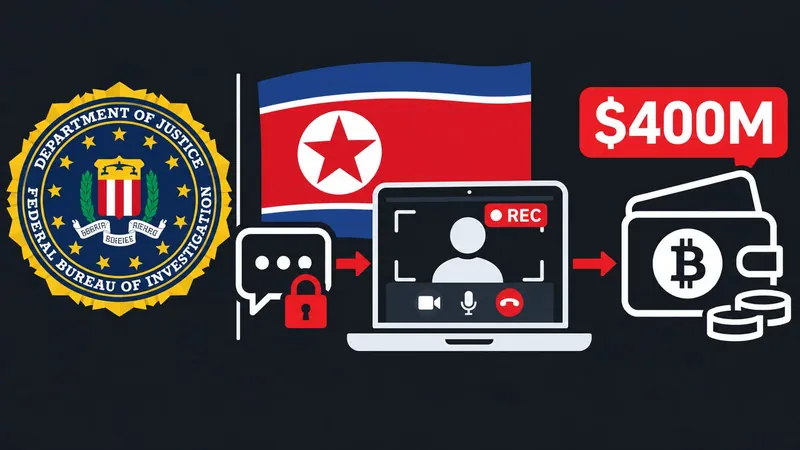
The FBI has disrupted a North Korean operation that stole more than $400 million in cryptocurrency over 18 months by hijacking messaging accounts and staging fake video meetings. The agency calls the campaign FaceStealer and links it to groups such as UNC1069, APT38, BlueNoroff and Sapphire Sleet.
How the Attackers Operate
The attackers first gain access to a victim’s communication account—often on Telegram, Slack, LinkedIn or Discord—then contact people in that person’s network. They invite them to a Zoom or Microsoft Teams meeting that redirects to a counterfeit website. In the staged meeting, hackers play prerecorded webcam footage of people the target knows, sometimes adding fabricated participants. The target is asked to run a script, click an update link or paste commands into a terminal, which installs malware that can log keystrokes, capture screenshots, and harvest browser cookies.
The FBI seized more than 900 webcam videos used for impersonation and warned that attackers have begun using AI-generated videos of well-known cryptocurrency figures, though real victim recordings remain the primary method. The compromise does not always lead to an immediate theft; in some cases, the attackers waited months or more than a year before draining wallets, monitoring balances in the interim.
Impact on Open-Source Developers
The scheme also targeted open-source software developers. In one incident, a maintainer of a widely used JavaScript library was compromised, and the attackers attempted to inject malicious dependencies. The attempt was detected before the library could distribute the code widely. The FBI’s advisory expands on how these approaches can reach software projects through their maintainers.
Readers should verify any unexpected video-call invitations by confirming the meeting link points to the official domain and by checking the inviter’s profile for authenticity. If a meeting link redirects to a different domain or the inviter’s profile shows inconsistencies, do not join and report the incident.
Immediate protective action: review all messaging accounts for unauthorized access, change passwords, enable two-factor authentication, and monitor wallet balances for unusual activity. If you suspect a compromise, isolate the device, run a reputable malware scanner, and consider contacting the FBI’s cybercrime unit.
Related coverage
- Domain and wallet-security source guide
- Ledger Unveils Android Wallet to Counter Social-Engineering Scams
- AI-Powered Analysis Reveals Hidden Phishing Chains in PDF Attacks